get_background_image()
Gets the URL of the background image set in the theme settings (in the customizer).
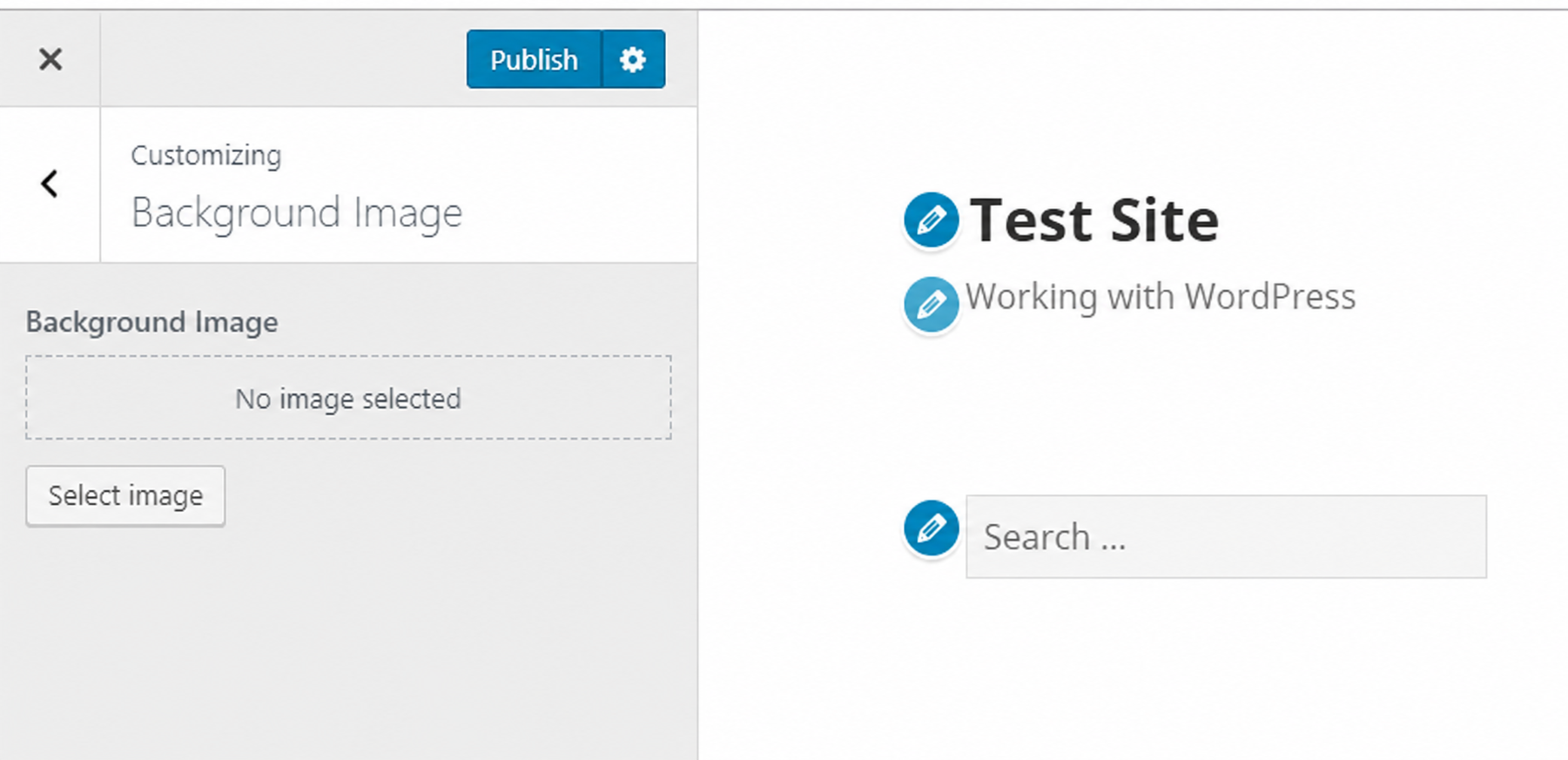
In order to set a background image, support for such an image must be enabled for the theme. This is done with the function add_theme_support('custom-background'). After enabling this option, a background image can be set in the customizer:
Use background_image() when you need to immediately output the URL to the screen.
Also see the similar function for getting the color get_background_color() and background_color().
Different theme options related to the theme background:
$position_x = get_theme_mod( 'background_position_x', get_theme_support( 'custom-background', 'default-position-x' ) );
$position_y = get_theme_mod( 'background_position_y', get_theme_support( 'custom-background', 'default-position-y' ) );
$size       = get_theme_mod( 'background_size',       get_theme_support( 'custom-background', 'default-size' ) );
$repeat     = get_theme_mod( 'background_repeat',     get_theme_support( 'custom-background', 'default-repeat' ) );
$attachment = get_theme_mod( 'background_attachment', get_theme_support( 'custom-background', 'default-attachment' ) );
No Hooks.
Returns
string. URL of the background image
Usage
get_background_image();
Examples
#1 Demo
$bg_image = get_background_image();
echo $bg_image; // http://example.com/wp-content/uploads/2015/04/image.jpg
#2 Display the URL in the css styles
<style>
	body.custom-background {
		background-image: url( '<?php background_image(); ?>' );
	}
</style>
#3 Use background image as fallback when the post thumbnail is not specified
This example shows how to use a post thumbnail as page background and, if the post picture is not set by default, take a picture from the theme settings:
<head>

	<meta http-equiv="Content-Type" content="<?php bloginfo('html_type'); ?>; charset=<?php bloginfo('charset'); ?>" />

	<?php
	if ( is_singular() ) {
		wp_enqueue_script( 'comment-reply' );
	}

	wp_head();

	// declare $post global if used outside of the loop
	global $post;

	// check to see if the theme supports Featured Images and if one is set
	if ( current_theme_supports( 'post-thumbnails' ) && has_post_thumbnail( $post->ID ) ) {

		// specify desired image size in place of 'full'
		$page_bg_image = wp_get_attachment_image_src( get_post_thumbnail_id( $post->ID ), 'full' );
		$page_bg_image_url = $page_bg_image[0]; // this returns just the URL of the image

	}
	else {
		// the fallback – our current active theme's default bg image
		$page_bg_image_url = get_background_image();
	}

	// And below, spit out the <style> tag...
	?>

	<style type="text/css" id="custom-background-css-override">
		body.custom-background {
			background-image: url('<?php echo $page_bg_image_url; ?>');
		}
	</style>

</head>
Changelog
| Since 3.0.0 | Introduced. |
get_background_image() get background image code WP 7.1.3
function get_background_image() {
	return get_theme_mod( 'background_image', get_theme_support( 'custom-background', 'default-image' ) );
}